- 123 Main St, City, Country
- Email: [email protected]

close
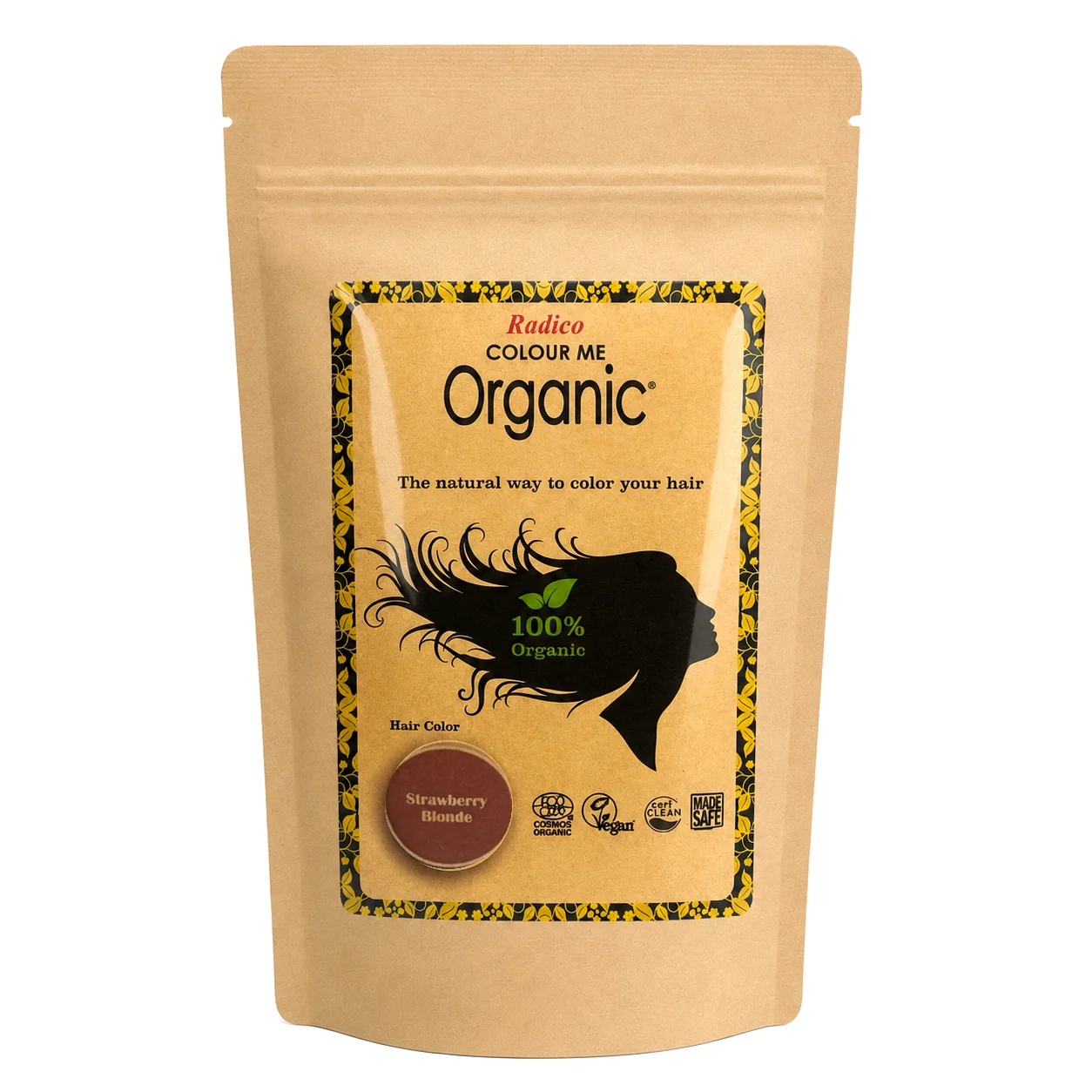
Strawberry Blonde Colour Me Organic Premium Organic Hair Colour Powder · 3.5oz The brightest red we make, and the most predictable. Six organic herbs and no indigo — which means...
The brightest red we make, and the most predictable. Six organic herbs and no indigo — which means no green stage at the rinse, no three-day wait, and no risk of the colour stalling partway.
It needs a light base. Plant pigment adds and lifts, so on medium brown hair a strawberry-gold barely registers and on anything darker it won't show at all. This shade is for blonde, light brown, highlighted or greying hair.
New to plant colour? — how it works, who it suits, and the vinegar trick that helps it take.
Not 99%, not 99.9% — every herb in the pouch is organic, and there is no base powder or carrier underneath them. Each shade is vacuum-sealed to slow oxidation before you open it, and shipped by air from our production facility in India so newer stock reaches you.
Strawberry Blonde brings a light, warm red-gold tone that reads as sunlit rather than dyed. It sits between blonde and red — bright enough to be noticed, soft enough to look like it grew that way.
Because plant pigment layers over the colour you already have instead of replacing it, your own variation stays underneath. Indoors it reads as a warm golden blonde with the red sitting quietly beneath; daylight and the strawberry surfaces.
Every complication in a herbal colour comes from indigo. Its pigment arrives as a colourless precursor, oxidises into blue over hours and into red-violet over days — which is why our browns and blacks pass through a green cast, keep shifting for three days, and can stall at purple if the hair dries out.
None of that applies here. Henna's lawsone bonds to keratin directly and shows its colour from the start. What you see at the rinse is close to what you keep — only warmer, and it eases within a day.
A strawberry blonde is one of the hardest colours a salon can build. Getting there means lifting first — often twice — and then placing the most fade-prone pigment there is onto hair that has just been made porous. Red molecules are the smallest and least light-stable of the lot, sitting in a cuticle that closed back.
This one doesn't lift anything. It works on a light base you already have, so the cuticle stays shut and there is no damage to repair afterwards. That's the whole trade: it costs you the option of going lighter, and saves you everything that comes with it.
Worth trying: the acid step. Add 1–2 teaspoons of apple cider vinegar to the mixed paste and let it rest 15–30 minutes before applying. Henna's pigment releases more readily in mildly acidic conditions, which helps if your colour usually comes out lighter than you hoped. This works because there is no indigo in this shade — don't carry it over to our browns, blacks or Reddish Blonde, where acidity holds the indigo back.
And keep the paste damp. Cover with a shower cap for a full hour. Dry paste transfers no pigment, so don't warm it with a hair dryer — the cap holds warmth and moisture together, which is what you actually want.
Customer and salon photos, in their own lighting — not shot by us and not retouched. Every one is on blonde, light brown or greying hair, because that is where a light red shows at all. Four of the five are salon work, usually with longer processing and more even coverage than most people manage at home.
📸 @oonak
📸 @hiusstudiolive — Salon
📸 @hairbypirjoliu — Salon
📸 @naturalhairbyjofa — Salon
📸 @hairbymatildanygren — Salon
There is no version of these photos on medium brown or darker hair. Within light hair, depth still shifts with your starting colour, grey percentage, porosity and processing time.
Portion the powder by hair length:
A light red depends more on its starting base than a deep one, and that is the hardest thing to judge from a photograph. First-time customers who don't get the result they expected can have a different shade sent , or a full refund on the colour.
Browse the collection of our new products and latest products. You will definitely find what you are looking for.